

Table of contents
Types of vinyl flooringTilesPlanksRollsWays of installing vinyl flooringLoose-laySelf-adhesiveClick systemBonding glueHow to install vinyl flooring?Installing vinyl planks with self-adhesive backingInstalling vinyl roll with bonding glueAdvantages of vinyl flooringHow to install vinyl flooring. We tell you all the steps and recommendations you should follow to install your floor ✅.
Vinyl flooring has many advantages and here you'll find everything related to it, but if you need more information about other types of flooring, you can keep reading related articles on our blog, such as, for example, how to install floating floorboards over tile.
Vinyl flooring is an ideal option for renovating your floor quickly and without annoying building work. Discover everything you need to get started installing your vinyl flooring.
Types of vinyl flooring
Vinyl flooring can mainly be split into two types with regard to shape and style:
Tiles
These have a square or rectangular shape and some have a style that mimics ceramic, stone, marble, etc.
Planks
This type is generally more elongated and its style tends to mimic wood flooring.
Rolls
There's also the option of installing vinyl flooring in rolls, which can be cut with ease to make installation easier.
All types are made up of a synthetic material base and a textured surface layer. This is known as the wear layer, and it's the thickness of this layer that determines the material's durability and how it wears.
Ways of installing vinyl flooring
There are also different types of vinyl flooring installation, which can be split into:
Loose-lay
It's the weight and characteristics of the vinyl planks themselves that keep them in place on the floor, with hardly any preparation needed — even uneven areas are covered thanks to the planks' properties. It's also a very easy product to replace and swap out.
Self-adhesive
This is a very simple type of installation, since it sticks to the surface once the protective paper has been removed. The planks or tiles can be cut and handled easily. This type of installation does require some prior preparation, since the area must be level and the floors non-porous to help adhesion.
Click system
This type is made up of interlocking systems in which pieces fit into one another; they can be installed on all types of surfaces quickly and easily, except on carpets and rugs.
Bonding glue
For example, in the case of rolls, there's the option of installing them with bonding glue, which we'll explain further below.
How to install vinyl flooring?
Below we explain in detail how to install vinyl flooring in two different ways, self-adhesive and bonding glue.
Installing vinyl planks with self-adhesive backing
- Prepare the floor, making sure it's clean, level, etc.
- Spread the adhesive paper over the floor.
- Install the vinyl planks one by one over the adhesive paper.
- To ensure correct alignment, use the spacer wedges, which show the gap to leave between the wall and the plank.
- Adjust the fit each time a plank is installed, either with a hammer or with special adjustment tools.
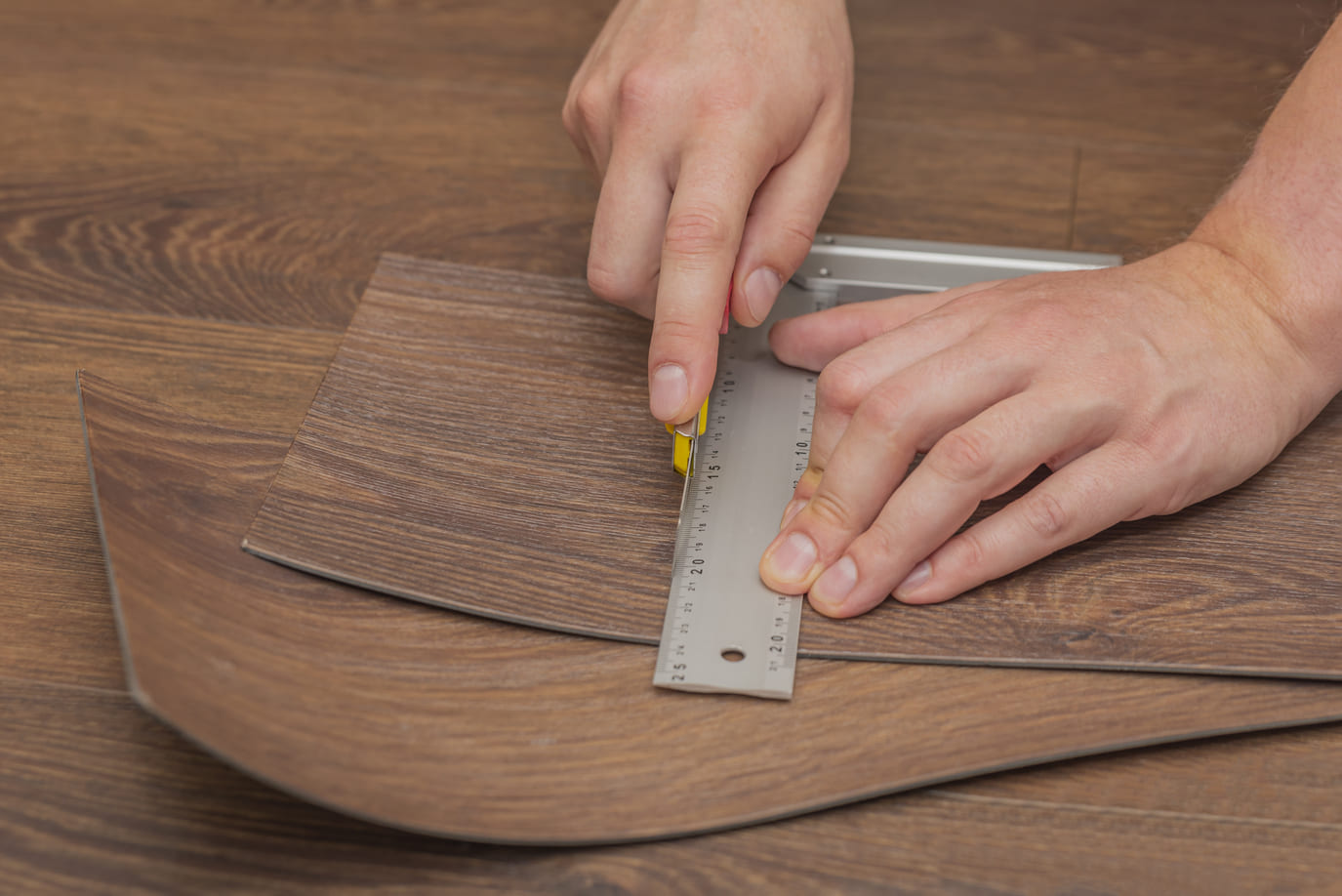
- If necessary, you can make cuts on some of the planks.
Installing vinyl roll with bonding glue
- Thoroughly clean the surface of the floor where it's going to be installed.
- Spread a layer of vinyl glue with a wide brush.
- Gradually unroll the roll over the glue and press down to help it settle, using a plastic or wood board covered with fabric to avoid scratches.
- When you reach the edge of the wall or a piece of furniture, cut with a professional cutter, also using a ruler or angle guide to ensure the cuts are straight. The fewer cuts you make, the better the final result will be
Advantages of vinyl flooring
- Vinyl floors are antistatic.
- They clean easily.
- They're compatible if you have underfloor heating systems.
- They're waterproof, so you can install them in bathrooms and kitchens.
- They have no pores, so no kind of bacteria grows on them.
- They add very little thickness to the existing floor, so you'll practically never need to trim down a door.
- They have minimal wear from foot traffic.
- There's a wide range of models to choose from.
- And as you already know, they're installed with great ease.
We hope this article on how to install vinyl flooring has been helpful.
See you next time!