

Table of contents
Materials needed to put plasterboard on wallsPlasterboard sheets: Special wall plugs for plasterboard:Channels and studs:Acoustic band:Other:Steps to put plasterboard on wallsPrepare the wall:Fix the frame:Installing the plasterboard:Insulation:Seal the wall:Advantages of putting plasterboard on wallsDry work:Lightweight and quick to install:No need for chasing:Resistant and flexible:Discover all the steps you need to follow to know how to put plasterboard on walls and enjoy all its advantages.
There are many advantages that having plasterboard at home can bring. In this article we tell you everything about plasterboard and how to fit it on your walls, but if you also want to know how to fit plasterboard on the ceiling and learn more details you can keep discovering them on our blog.
Plasterboard is a very lightweight material that is at the same time resistant to compression and bending, being made up of layers of gypsum covered with cardboard, which allows renovations to be done more cleanly and without having to take on major building work. If you want to know whether it suits your needs and is easy to install, keep reading.
Materials needed to put plasterboard on walls
The first thing you need to correctly build a plasterboard wall is to have the necessary materials, and it's important that they're the right ones and of good quality. This can make the difference between having a sturdy plasterboard wall on which you can hang a considerable load or not. For example, if we didn't have suitable wall plugs and plasterboard sheets, the hanging load capacity wouldn't exceed 30 kg and we couldn't do it without a professional.
These are the main materials needed for this type of renovation:
- Plasterboard sheets:
There are different brands, but the one that has already become generic is "pladur". As mentioned earlier, it has high resistance to compression and bending.
- Special wall plugs for plasterboard:
These are different from conventional wall plugs, specifically designed for plasterboard sheets and used to anchor them.
- Channels and studs:
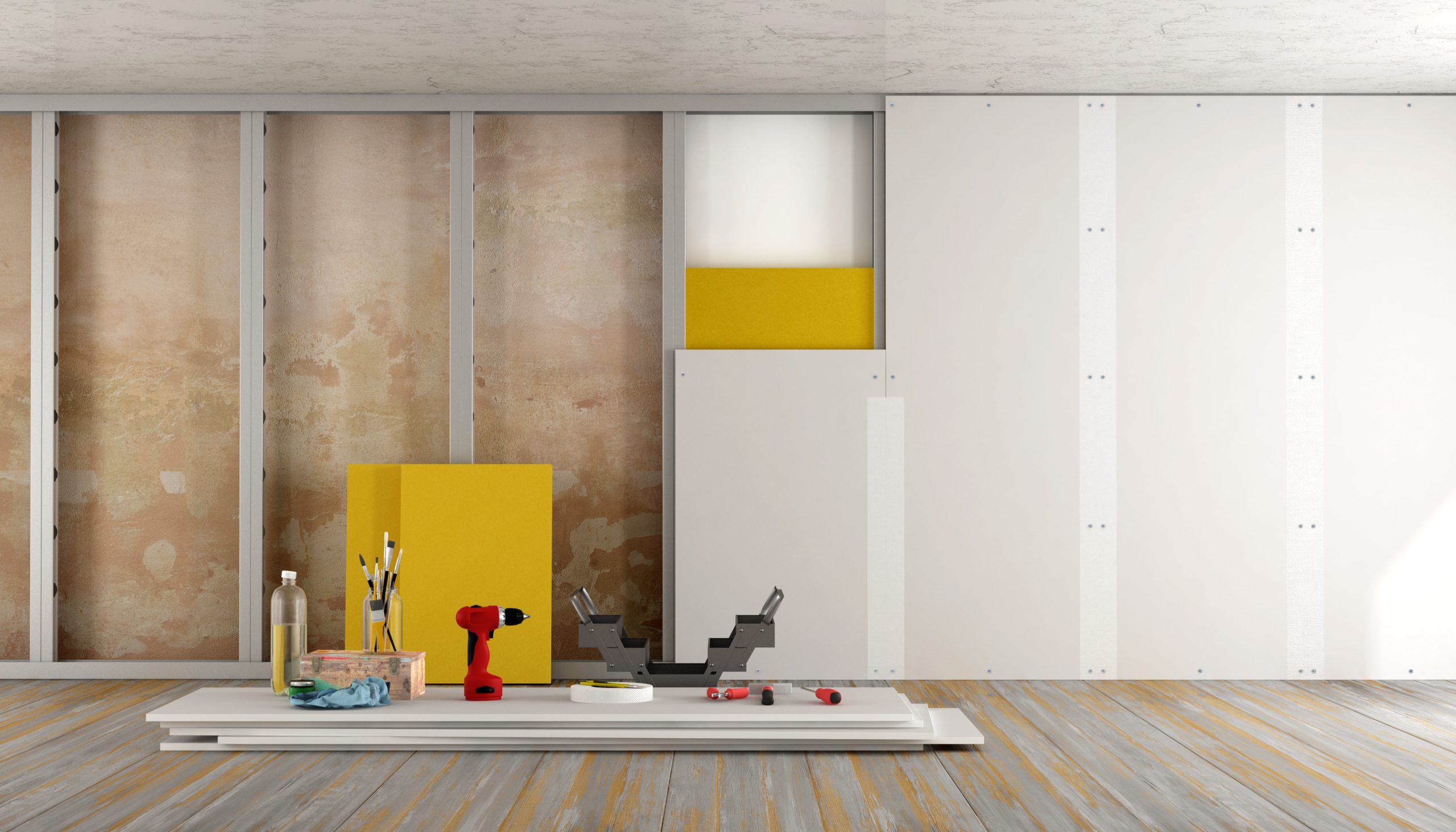
You'll need the metal channels that are fitted to the floor and ceiling, and the also-metal studs which, in this case, are fitted vertically, and which can have other uses such as holding cables inside.
- Acoustic band:
Designed to reduce the vibrations and noise the metal frame can cause, it's fitted between the channels and the floor, and the studs and the walls.
- Other:
There are other materials that, although not essential, may be needed, such as joint tape, to cover the joints between sheets, and joint compound to cover these tapes. Paint is also needed if we want to give the wall a different tone and look, along with a cutter, scissors or an angle grinder to make the cuts on the sheets.
Steps to put plasterboard on walls
Once we've gathered all the necessary materials, it's very important before the first step to take all the necessary measurements, since we won't know how to put plasterboard on walls, if we don't know the dimensions of the space. The following steps are:
- Prepare the wall: the area where it's going to be fitted must be cleaned so there's no dirt, and dampened if it's a porous wall.
- Fix the frame: the channels and studs — usually starting with the floor channels, then the ceiling, and then the studs — based on the measurements taken previously. Including fitting the acoustic band.
- Installing the plasterboard: the first thing will be to cut the sheets if necessary, in line with the measurements taken, and then proceed to fit the gypsum sheets, levelling them and fitting them well so they don't cause any problems later.
- Insulation: fit the insulation, which usually comes in rolls that are easy to fit, and then fit the other plasterboard sheet so it ends up in the middle.
- Seal the wall: apply the tape and the joint compound so it's well sealed, and finally paint to your liking.
Advantages of putting plasterboard on walls
- Dry work:
No cement or wet materials that make a mess and make the renovation more disruptive.
- Lightweight and quick to install:
It's an easy material to handle and although its installation can be somewhat complex, it's simpler than, for example, a brick wall.
- No need for chasing:
It has cavities where cables can be run without needing to drill holes or produce rubble.
- Resistant and flexible:
They prevent cracks from appearing and, by choosing the right plasterboard sheets, they can be used anywhere, adapting fully to every need.
Now that you know how to put plasterboard on walls and what its advantages are, don't hesitate to carry out this renovation, and if you need to, get in touch with professionals who can advise and help you.