

Tips for maintaining floating floorboards. How to care for the floating floorboard flooring in your home.
Floating floorboards are one of the preferred options for many people renovating the floors of their home. This is no surprise, since they bring a feeling of homeliness and warmth that makes all the difference. In addition, there are multiple types of floating floorboards, which allows this type of flooring to adapt to any style or existing decor.
However, since it's made of natural materials, how to carry out the maintenance of floating floorboards is still a question for many. If you want to find out how to do it the best way, in this post we give you the best tips. Keep reading!
Characteristics of floating floorboards
There's a lot of confusion about the differences when choosing between parquet, laminate and floating floorboards. While laminate is a flooring that imitates the natural look of wood but is made of synthetic materials, floating floorboards are made of natural wood, like parquet.
This difference is very important to know how to carry out their maintenance correctly, since the needs of natural and synthetic materials are different.
As for parquet and floating floorboards, their main difference is based on installation. While parquet is glued to the floor, floating floorboards are laid over the existing floor, which acts as a base.
Floating floorboards have many positive characteristics such as their natural appearance, their warmth or their resistance, being made from quality wood. However, this also makes them a very delicate flooring that requires specific maintenance.
How to avoid damage to our floating floorboards
The first tip for keeping your floorboards in good condition for longer is to avoid damage. As prevention is better than cure, below we leave you some tips to avoid dirtying or damaging this type of flooring so much:
- Use a doormat at every entrance to your home. This simple measure will keep much of the dirt stuck to our shoes outside our home. If you have a balcony or terrace, we recommend not forgetting to place a doormat at those doors too.
- Place curtains or blinds in every room with floorboards. Besides their decorative function, curtains will prevent our floor from being damaged by direct light, and in warm seasons when windows stay open, they help filter the dust coming in from the street, preventing it from settling on the floating floorboards.
- Cover the legs of chairs, tables and other furniture with felt. This way, we'll prevent the floor from being scratched when dragging these objects, avoiding marks and scratches.
- Use different footwear inside and outside the house. This will prevent dirt from the street spreading through every room of the house and will help keep the floors clean for longer.
- Don't use excess floor cleaner or detergent to clean the floorboards. Doing so would leave a sticky residue layer that will stain the floor.
- Wring out the mop properly before cleaning the floors. Using excess water can damage and warp the wood.
How to clean and maintain floating floorboards
Now that we know how to avoid possible damage to this type of wood flooring, we should know how to clean and maintain it correctly. Below we tell you how to do it:
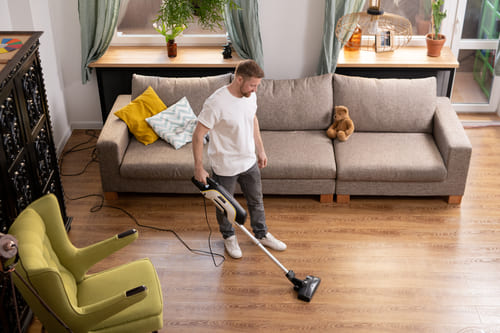
- Remove dust daily. To do this, it's best to use a microfiber mop or a vacuum cleaner, but it's also possible to do it with a brush or broom. Always do it in the direction of the planks to prevent dust from getting stuck between the gaps of the joints.
- Use a detergent suitable for floorboards. Fill a bucket with clean water and the amount of floor cleaner indicated by the manufacturer. Don't use more than needed, as this will be counterproductive.
- Mop the floor applying some pressure. To remove dirt from the floorboards thoroughly, it's necessary to clean them carefully. Don't just pass the mop over the surface.
- Rinse off the detergent. To prevent a layer of product from remaining on the floorboards after mopping, we recommend rinsing the mop and going over it again after 2 or 3 minutes using only clean water.
Beyond daily care, maintaining floating floorboards requires that, approximately every 10 years, a restoration be carried out in which the surface is sanded and varnished. For this, at Payresa we advise putting yourself in the hands of professionals to achieve the best results.