

Table of contents
Floorboards or parquet: What to choose for your home?What is the difference between Floating Floorboards and parquet?What is parquet?Solid wood parquetMulti-layer or engineered parquetGlued parquetFloating parquetWhat is floating flooringNatural wood floating floorboardsLaminate flooringVinyl floorboards or click vinyl flooringParquet or floating floorboards: main differences1. Material composition2. Installation system3. Aesthetic finish4. Durability5. Maintenance6. Price7. Moisture resistance8. Feel underfootComparison table: parquet vs floating floorboardsAdvantages of parquetDisadvantages of parquetAdvantages of floating floorboardsDisadvantages of floating floorboardsSo, which is better: floating floorboards or parquet?When to choose parquetWhen to choose floating floorboardsAnd laminate flooring?Common mistakes when choosing between parquet and floorboardsChoosing only by priceNot considering the home's useConfusing floating floorboards with parquetNot preparing the base properlyInstalling without professional advicePayresa's tips before installing parquet or floorboardsFrequently asked questions about the difference between parquet and floorboardsWhat is the difference between parquet and floorboards?Which is more expensive, parquet or floating floorboards?Which lasts longer, parquet or floorboards?Can floating floorboards be installed over an old floor?Can parquet be repaired?Can floating floorboards be sanded?Which flooring is best for a home with children?Which flooring is best for a home with pets?Which is easier to maintain, parquet or floorboards?Which looks more elegant, parquet or floorboards?What does Payresa recommend: parquet or floorboards?floorboards or parquet, the best choice depends on your homeFloorboards or parquet: What to choose for your home?Choosing the right flooring for a home is an important decision. It not only affects the aesthetics of the house, but also comfort, maintenance, budget and the long-term durability of the flooring. One of the most common doubts when renovating a home is whether to install parquet Málaga, floating floorboards or laminate flooring.
Although they are often used as if they were the same thing, not all these floors have the same composition, installation or resistance. That's why, before requesting a quote, it is essential to understand the difference between parquet and floorboards, what advantages each option has and which one best fits the actual use of your home.
At Payresa, as specialists in the installation and renovation of wood flooring, we help our clients choose the most suitable solution based on the type of home, daily foot traffic, available budget and the finish they want to achieve.
Below, we clearly explain the difference between parquet and floating floorboards, what advantages each material offers and in which cases it is best to choose one or the other.
What is the difference between Floating Floorboards and parquet?
The main difference between parquet and floorboards lies in the flooring's composition, the installation system, the price, durability and maintenance.
Parquet is a natural wood flooring. It can be made of solid wood pieces or multi-layer wood with a top layer of fine wood. Its main appeal is that it offers a natural, elegant and exclusive finish, since each plank has its own grain and shades.
Floorboards, on the other hand, usually refer to a type of flooring that can be made of natural wood, multi-layer wood or derived materials, and that is usually installed using a floating system. That is, it is not always glued or nailed to the original floor, but placed over an insulating base.
For this reason, when we talk about floating floorboards, we are actually referring more to the installation system than to the material itself. There can be floating floorboards made of natural wood, but also laminate flooring installed in a floating manner.
What is parquet?
Parquet is a flooring covering made with natural wood. It has traditionally been considered one of the most elegant options for homes, offices and interior spaces where warmth, quality and a lasting aesthetic are sought.
It can come in different formats:
Solid wood parquet
Wood parquet is made up of a single piece of natural wood. It is a high-quality option, resistant and highly valued for its authentic appearance. One of its main advantages is that it can be sanded and varnished several times throughout its useful life, as long as it is thick enough.
Multi-layer or engineered parquet
It is made up of several layers of wood or derived materials, with a top layer of fine wood. It offers an aesthetic very similar to solid wood, but usually has greater stability against changes in humidity and temperature.
Glued parquet
It is installed by gluing the pieces directly onto the floor base. This system offers a very solid feel underfoot and reduces footstep noise, although it requires a more technical installation.
Floating parquet
Floating parquet is placed over an insulating base, without gluing each piece to the floor. This system makes installation easier and reduces work time, although not all floating products have the same quality or behaviour.
What is floating flooring
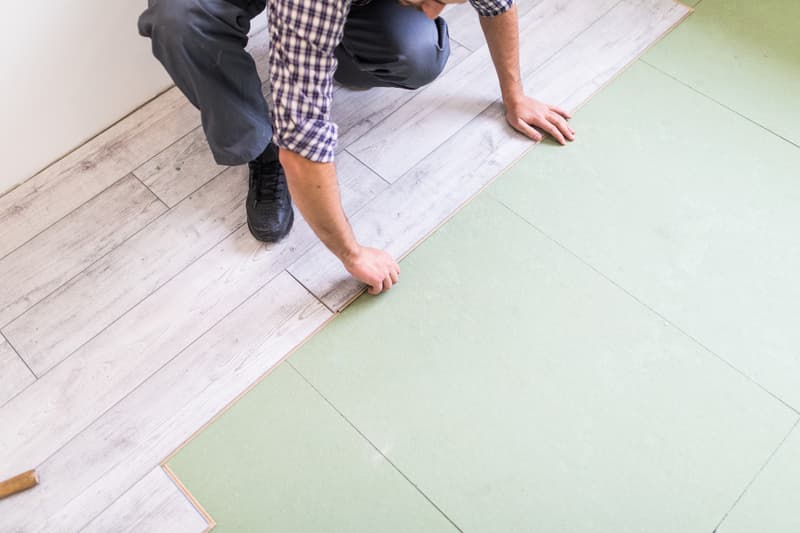
Floating flooring is a covering that is installed over the existing floor without needing to fix it directly with glue or nails. The planks are joined together using click or interlocking systems, and an insulating base is placed underneath that improves comfort and helps reduce noise.
One of its great advantages is that it can be installed quickly and cleanly, without needing to completely remove the previous flooring, as long as the base is level and in good condition.
Floating flooring can be of different types:
Natural wood floating floorboards
It has a top layer of genuine wood. It offers a very natural aesthetic and can undergo certain restoration processes, depending on the thickness of the fine wood layer.
Laminate flooring
Although many people call it floating floorboards, laminate flooring is not natural wood. It is made up of several layers, usually with a high-density wood fibre base and a decorative layer that imitates wood, stone or other finishes.
Vinyl floorboards or click vinyl flooring
This is another highly demanded alternative for its moisture resistance and ease of maintenance. Although it is not parquet, it can be installed in a floating manner and offer finishes that very closely imitate wood.
Parquet or floating floorboards: main differences
To make a good decision, it is worth comparing both types of flooring based on the most important aspects.
1. Material composition
Parquet is made with natural wood. It can be solid wood or multi-layer, but it always has a real wood presence.
Floating floorboards, on the other hand, can be made of natural wood, wood-derived materials, laminates or vinyl. That's why not all floating floorboards have the same quality or the same price.
At Payresa we always recommend checking the product's technical specifications before choosing, because two floors with a similar appearance can have very different compositions, resistances and behaviours.
2. Installation system
Parquet can be installed in several ways: glued, nailed, battened or floating. Some systems require more preparation, more time and specialised labour.
Floating floorboards, as the name suggests, are installed without fixing them directly to the flooring. They are placed over an insulating base and the pieces are joined together.
This difference makes floating floorboards a very convenient option for quick renovations, occupied homes or projects where a more complex construction job wants to be avoided.
3. Aesthetic finish
Parquet offers a more natural and exclusive finish. Since it is made of real wood, each board has a unique pattern, with grain, knots and colour variations characteristic of the material.
Floating floorboards, especially if laminated, can imitate wood very well, but they don't always achieve the same visual depth or the same natural texture as quality parquet.
If you're looking for flooring with character, elegance and long-term value, parquet tends to be a superior option. If you prefer a variety of designs, tones and finishes at a more affordable price, floating floorboards can be a very practical alternative.
4. Durability
Durability depends on the type of product, the quality of the installation and the maintenance.
Natural wood parquet can last many years if properly cared for. Additionally, one of its great advantages is that it can be restored through sanding and varnishing, especially if it is thick enough.
Floating floorboards can be very durable, especially in the case of high-quality laminate flooring with a good usage classification. However, not all models can be sanded or repaired in the same way as natural wood.
In high-traffic areas, homes with children, pets or commercial premises, it is important to choose flooring with good resistance to wear, impacts and stains.
5. Maintenance
Parquet requires more careful maintenance. Being natural wood, it's best to avoid excess water, protect it from hard knocks and use suitable products for cleaning.
Floating floorboards and laminate flooring tend to be easier to maintain. Frequent cleaning with a mop, vacuum or well-wrung mop is enough, always following the manufacturer's recommendations.
In homes where comfort and low maintenance are sought, floating floorboards tend to be more practical. On the other hand, if you value the authenticity of wood and are willing to care for it, parquet offers a quality that is hard to match.
6. Price
Parquet usually has a higher price than floating floorboards. This is due to the cost of natural wood, the type of installation and the specialised labour it may require.
Floating floorboards, especially laminate flooring, offer a more economical solution. In addition, since they are installed more quickly, they can also reduce construction costs.
However, you shouldn't choose based on price alone. Cheaper flooring can end up being costly if it doesn't suit the actual use of the home or if it is installed without properly preparing the base. That's why, at Payresa, we always recommend weighing up the relationship between quality, durability, aesthetics and budget.
7. Moisture resistance
Natural wood is sensitive to moisture. That's why parquet is not usually the most recommended option for bathrooms, kitchens with a lot of water exposure or areas where there may be frequent moisture, unless specific products are chosen and properly installed.
Some laminate and vinyl floors offer greater moisture resistance. In these cases, floating floorboards can be a more practical option for certain rooms.
If you have doubts about which flooring to install in a kitchen, hallway, bedroom or commercial premises, it's best to consult professionals like Payresa to avoid later problems with expansion, buckling or premature wear.
8. Feel underfoot
Parquet has a warm, natural and comfortable feel underfoot. Real wood provides a pleasant sensation and improves the perceived quality of the space.
Floating floorboards can also be comfortable, especially when installed with a good insulating base. However, depending on the product and the installation, it may produce a lighter or hollow feeling when walking on it.
Professional installation is key to avoiding noise, movement, open joints or irregularities in the floor.
Comparison table: parquet vs floating floorboards
Advantages of parquet
Parquet remains one of the most valued options for those seeking high-quality flooring. Its main advantages are:
- It provides a natural, elegant aesthetic.
- Each piece of wood is unique.
- It improves the feeling of warmth in the home.
- It can be restored through sanding and varnishing.
- It has a long useful life if properly maintained.
- It adds value to the home.
- It works as a good thermal and acoustic insulator.
For all these reasons, parquet is an excellent choice for living rooms, bedrooms, studies and homes where a distinguished, lasting finish is sought.
Disadvantages of parquet
Although it offers many advantages, it also has some drawbacks worth considering:
- Its price is usually higher.
- It requires greater care against impacts and moisture.
- Installation can be more complex.
- It needs specific cleaning products.
- It can deteriorate if not properly maintained.
That's why, before installing parquet, it is advisable to get professional advice to choose the right type of wood, finish and installation system.
Advantages of floating floorboards
Floating floorboards are a very popular option due to their balance between aesthetics, price and ease of installation. Their main advantages are:
- Fast, clean installation.
- Good quality-price ratio.
- Wide variety of colours, textures and designs.
- Can be placed over the existing flooring.
- Simple maintenance.
- Good resistance in quality models.
- Lower cost than traditional parquet.
It is a particularly interesting alternative for home renovations, rental flats, children's rooms, offices and spaces where you want to renew the flooring without a complex construction job.
Disadvantages of floating floorboards
You should also keep some negative points in mind:
- It's not always natural wood.
- Some models cannot be repaired or sanded.
- It can sound hollower if the installation isn't good.
- Quality varies a lot depending on the manufacturer.
- Economical models can wear out sooner.
The key is to choose quality floorboards and trust the installation to specialised professionals.
So, which is better: floating floorboards or parquet?
There is no single answer. The choice between floorboards or parquet depends on your priorities.
If you're looking for natural, elegant, durable flooring with the possibility of restoration, parquet is an excellent option. It is ideal for those who value the authenticity of wood and want a high-quality finish.
If you're looking for a more economical solution, easy to install, resistant and low-maintenance, floating floorboards or laminate flooring can be a highly recommended alternative.
At Payresa we analyse each project individually, because installing flooring in a family home is not the same as in a second residence, an office or a high-traffic commercial premises.
When to choose parquet
We recommend choosing parquet if:
- You want natural wood flooring.
- You're looking for an elegant, timeless aesthetic.
- You want to increase the value of your home.
- You prefer flooring that can be restored.
- Budget is not the main constraint.
- The room is not exposed to much humidity.
- You value the warmth and authenticity of wood.
Parquet is a long-term investment. Properly installed and maintained, it can last a home for many years.
When to choose floating floorboards
Floating floorboards can be the best option if:
- You're looking for a quick renovation.
- You want to reduce installation costs.
- You need flooring that's easy to clean.
- You have children or pets.
- You want a wide variety of finishes.
- You need to renew the floor without removing the previous flooring.
- You prefer a practical, functional solution.
It is also a very interesting option for rental homes, apartments, offices and spaces that need resistance on a tight budget.
And laminate flooring?
Laminate flooring deserves a special mention, because it is often confused with floating floorboards. Laminate is not natural wood, but rather flooring made up of several layers, usually with a base of pressed wood fibres and a decorative layer that imitates wood.
Its main advantage is that it offers great resistance and a competitive price. In addition, there are models with different usage classifications, so they can be adapted to homes, offices or commercial premises.
If your priority is resistance and easy maintenance, laminate can be a very interesting option. If your priority is natural wood, then it's worth considering parquet or wood floorboards.
Common mistakes when choosing between parquet and floorboards
Before deciding, it's worth avoiding some common mistakes:
Choosing only by price
Cheap flooring may seem appealing at first, but if it doesn't have good resistance or isn't installed properly, it can deteriorate quickly.
Not considering the home's use
A home with little foot traffic doesn't need the same flooring as a house with children, pets or a lot of daily movement.
Confusing floating floorboards with parquet
Floating floorboards can be made of wood, laminate or vinyl. That's why it's important to check the actual composition of the product.
Not preparing the base properly
A poorly levelled floor can cause noise, movement, open joints or stability problems.
Installing without professional advice
Installation directly influences the durability of the flooring. At Payresa we have experience installing wood floors and floorboards, which allows us to guarantee a safer, longer-lasting result.
Payresa's tips before installing parquet or floorboards
Before choosing your flooring, at Payresa we recommend considering these points:
- Type of room: bedroom, living room, kitchen, hallway, office or premises.
- Level of foot traffic: low, medium or high.
- Presence of moisture: especially in kitchens, ground floors or poorly ventilated areas.
- Available budget: material, installation and possible prior works.
- Decorative style: natural, rustic, modern, classic or minimalist.
- Desired maintenance: natural wood with more care or practical, low-maintenance flooring.
- Condition of the current flooring: levelling, moisture and stability of the base.
A good choice always starts with a prior diagnosis.
Frequently asked questions about the difference between parquet and floorboards
What is the difference between parquet and floorboards?
The main difference is that parquet is made with natural wood, while floorboards can be made of wood, laminate, vinyl or other materials. In addition, floating floorboards are usually installed over the existing floor using a click system, without gluing directly to the base.
Which is more expensive, parquet or floating floorboards?
Normally, parquet is more expensive than floating floorboards because it uses natural wood and may require more specialised installation. Floating floorboards or laminate flooring tend to be more economical and faster to install.
Which lasts longer, parquet or floorboards?
Quality parquet can last many years and can even be restored through sanding and varnishing. Floating floorboards can also be durable, but it depends a lot on the type of material, the quality of the product and the daily use it receives.
Can floating floorboards be installed over an old floor?
Yes, in many cases floating floorboards can be installed over an existing floor, as long as the base is level, dry, clean and stable. This is one of the great advantages of this installation system.
Can parquet be repaired?
Yes. One of the advantages of natural wood parquet is that it can be sanded and varnished to restore its original appearance. The possibility of repair will depend on the thickness of the wood and the condition of the floor.
Can floating floorboards be sanded?
It depends on the type of floorboards. If it's a wood floorboard with a sufficient fine layer, it can undergo some sanding. However, laminate flooring cannot be sanded like parquet, since its surface is not natural wood.
Which flooring is best for a home with children?
For a home with children, floating floorboards or high-resistance laminate flooring can be a very practical option, since they offer good resistance to daily use and are easy to clean. However, there are also parquets treated with resistant finishes.
Which flooring is best for a home with pets?
In homes with pets, it's best to choose flooring resistant to scratches, stains and moisture. Some laminate or vinyl floorboards can work very well. If you choose parquet, it's advisable to opt for hardwoods and quality protective finishes.
Which is easier to maintain, parquet or floorboards?
Floating floorboards and laminate flooring tend to be easier to maintain. Parquet requires more care, especially against water, knocks and aggressive cleaning products.
Which looks more elegant, parquet or floorboards?
Parquet usually offers a more elegant, natural and exclusive finish, because it's made with real wood. However, there are now high-end floorboards and laminates with very realistic, decorative finishes.
What does Payresa recommend: parquet or floorboards?
At Payresa we recommend choosing according to each home's needs. If you're looking for natural wood, long-term value and a premium finish, parquet is a great option. If you're looking for a quick, economical and resistant renovation, floating floorboards can be the more suitable alternative.
floorboards or parquet, the best choice depends on your home
Now that you know the difference between parquet and floorboards, it's easier to make the right decision. Parquet stands out for its natural beauty, durability and possibility of restoration. Floating floorboards, on the other hand, offer quick installation, a variety of finishes and an excellent quality-price ratio.
The key is to analyse the use of the home, the budget, the level of maintenance you're willing to take on and the aesthetic result you're looking for.
At Payresa we are specialists in installing parquet, floating floorboards and wood flooring. We give you personalised advice so you choose the flooring that best suits your home or business.
Contact Payresa and we'll help you find the perfect flooring for your space.
Contact us with no obligation for a personalised quote tailored to your needs or to resolve any other question you may have.