

WHAT IS THE BEST OUTDOOR FLOORING?
Choosing the best outdoor flooring is a crucial decision for any terrace or garden project. The right choice not only improves the look of the space, it also guarantees safety and durability. In this Payresa article, as a company specialized in parquet in Málaga and floorboards, we'll explore the most recommended options and how to choose the best flooring for your outdoor space.
Table of contents
WHAT IS THE BEST OUTDOOR FLOORING?What to consider when choosing outdoor flooring?Key factors in the choiceMost common materialsAdvantages of non-slip flooringSafety in every seasonPopular non-slip materialsWhich is the best outdoor flooring?Recommended options for outdoorsAdditional considerations when choosing the Best Outdoor FlooringFrequently asked questions about the Best Outdoor FlooringWhat is the best material for outdoor flooring in humid climates?Does outdoor wood flooring require a lot of maintenance?Is natural stone a good option for outdoor flooring?Which flooring is ideal for high-traffic areas?Which is the easiest outdoor flooring to maintain?Does all outdoor flooring need to be non-slip?
What to consider when choosing outdoor flooring?
Key factors in the choice
Choosing the best flooring for outdoors should be based on several fundamental factors:
Durability
Outdoor flooring must withstand the weather, from heavy rain to constant sun exposure.
Maintenance
Choose materials that require little maintenance and are easy to clean.
Aesthetics
The flooring should complement the design of your terrace or garden, creating visual harmony.
Safety
It's essential for the flooring to be non-slip in order to prevent accidents.
Most common materials
There's a wide variety of synthetic flooring for outdoor use that you can consider.
Treated wood
It offers a natural look that blends perfectly into the outdoor setting. However, it requires regular maintenance to prevent deterioration.
Ceramic tiles
Ceramic tiles are durable and easy to clean. Available in a variety of designs and colors, they can adapt to any style. They're non-slip and long-lasting, though they can feel cold underfoot in winter.
Natural stone
A durable and resistant material, natural stone adds a sophisticated, timeless touch. Each piece is unique, guaranteeing an exclusive design. It's ideal for high-traffic areas and areas with changing weather conditions.
Composite
Composite combines wood fibers and recycled plastics, offering a sustainable, low-maintenance option. It's resistant to moisture and doesn't splinter, ideal for areas with high humidity.
Advantages of non-slip flooring
Safety in every season
One of the most important aspects when choosing the best outdoor flooring is safety. Non-slip flooring is essential to prevent accidents, especially in areas prone to rain or around pools.
Popular non-slip materials
Rubber
Widely used in play areas and around pools due to its high slip resistance.
Non-slip ceramic
Offers a rough surface that prevents slips, ideal for patios and terraces.
Textured treated wood
Provides a non-slip surface without sacrificing aesthetics.
Which is the best outdoor flooring?
Recommended options for outdoors
Porcelain
- High resistance: Withstands the weather and wear and tear.
- Wide variety: Available in multiple designs, colors and textures.
- Non-slip: Ideal for areas prone to getting wet.
- Low porosity: Resistant to moisture and stains, easy to clean.
Composite decking
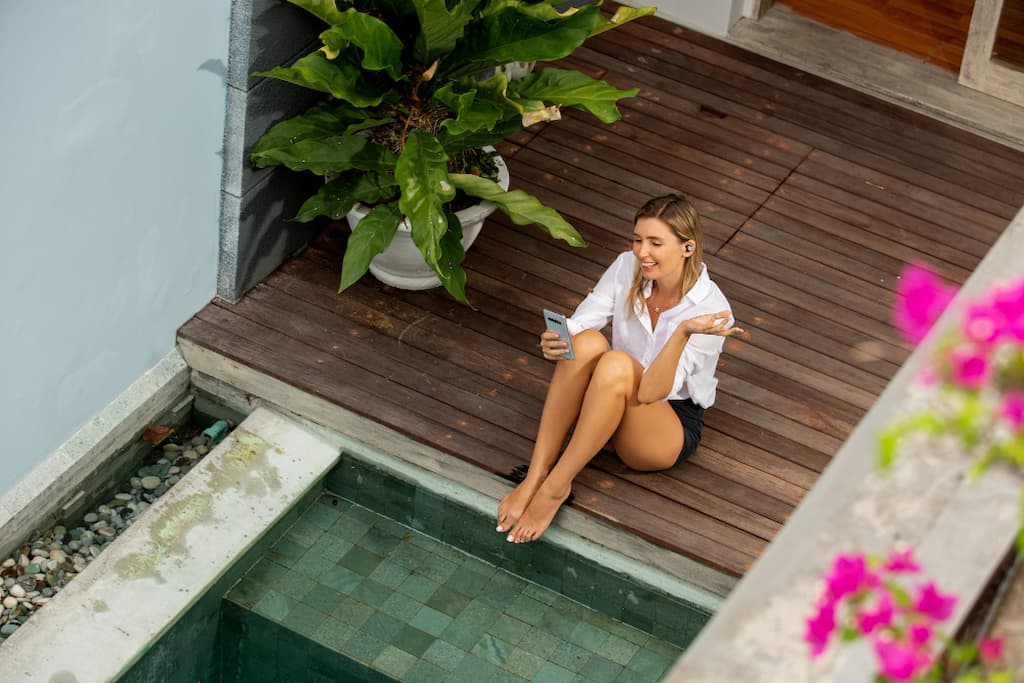
- Wood look: Offers a warm, natural look without intensive maintenance.
- Durable: Resists moisture, insects and fungi.
- Non-slip: Safe to walk on barefoot.
- Eco-friendly: Made from recycled materials.
Natural stone
- Sophistication and resistance: Materials such as granite, slate, marble and travertine.
- Extreme durability: Withstands heavy traffic and adverse weather conditions.
- Unique aesthetics: Each piece is exclusive, adding a touch of elegance.
- Variety: Different types of stone to suit any design.
Additional considerations when choosing the Best Outdoor Flooring
When choosing the best outdoor flooring for your terrace, consider sun and shade exposure, as well as possible water build-up. Make sure the chosen material can withstand these conditions without losing its integrity or appearance.
Frequently asked questions about the Best Outdoor Flooring
What is the best material for outdoor flooring in humid climates?
Composite and non-slip ceramic tiles are excellent options for humid climates due to their moisture resistance and ease of maintenance.
Does outdoor wood flooring require a lot of maintenance?
Yes, treated wood requires regular maintenance, such as sealing and protection against insects, to keep its appearance and durability.
Is natural stone a good option for outdoor flooring?
Yes, natural stone is extremely durable and weather-resistant, although it can be more expensive than other materials.
Which flooring is ideal for high-traffic areas?
Porcelain and natural stone are ideal options for high-traffic areas due to their high resistance and durability.
Which is the easiest outdoor flooring to maintain?
Composite is known for being one of the easiest materials to maintain, since it doesn't splinter or require special treatments.
Does all outdoor flooring need to be non-slip?
It's highly recommended for outdoor flooring to be non-slip to ensure safety, especially in areas prone to getting wet, such as around pools or play areas.
Choosing the best outdoor flooring involves considering factors such as durability, maintenance, aesthetics and safety. Options such as natural stone, composite, and ceramic tiles offer a perfect combination of resistance and beauty. By prioritizing non-slip flooring, you ensure a safe, functional space to enjoy the outdoors.
If you enjoyed this article, we think you might also like: “What is the best flooring for a house with dogs?”
Rate our article on: “Choose the Best Outdoor Flooring: Durability and Design for Your Terrace or Garden”
Contact us with no obligation for a personalized quote tailored to your needs or to resolve any other questions you may have.